In this issue, I would like to take up the theme shown in the title from the book Nihonjin yo, Hahagokoro ni Kaere (“Japanese People, Return to a Mother’s Heart”) by Master Masando Sasaki,* a great Aikido teacher and chief priest of the Yamakage Shinto tradition.
Words by Mr. Sasaki are quoted in “ ” below.
“Just as the mountains, rivers, and even the roads of our childhood look smaller when we return to them after decades, it is impossible to look for the father and mother of our childhood in the husband and wife we see now.
A father is to be respected.
A mother is the very embodiment of love.
Husband and wife are, in fact, two separate persons, and harmony lies in the bond between these two counterparts.
Therefore, never neglect a gentle face, loving words, and mutual respect.
Husband and wife are strangers by origin, a man and a woman who are opposites, and it is precisely because they are opposites that they are joined together.
Harmony is the very life of the family.
Because separation is always possible, we must treasure harmony.
Just as we handle things with care because they can break, we must never forget that husband and wife are the closest of strangers, and we should always protect the fragile home with loving words and mutual respect.”
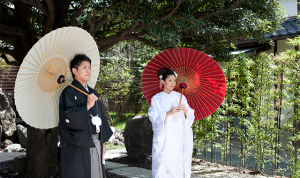
I believe that management, too, must begin with preserving harmony in the home.
To maintain the “harmony” that Master Sasaki speaks of, I believe the following steps are important:
1 Recognize the images of the masculine and feminine within yourself
2 Recognize the differences between men and women
3 Begin the reform with women
I will now explain each of these points in more depth.
1Recognize the images of the masculine and feminine within yourself
Master Sasaki’s Words
“When a young man falls in love with an older woman, it is because he senses the presence of his mother in her.
A young woman, in her youth, tends to cherish younger men. This is her maternal instinct.
After the age of thirty, she begins to feel drawn to older men, for she senses in them the great father of her childhood — strong, capable, and seemingly knowing everything.”
My Commentary
Based on my studies in psychology and methods for releasing emotional blocks, as well as the counseling I have provided to several individuals, I have come to recognize that a person’s perception of the masculine and feminine appears vividly in their choice of marriage partner.
People often enter marriage carrying preconceived notions such as:
“Women should be this way,” “Men must behave like this,” “A husband should naturally do this,” “A wife is supposed to do that.”
With these assumptions, they begin to live together.
It is said that children whose parents divorced often end up divorcing when they themselves marry.
If so, then for anyone who seeks a fulfilling marriage and a fulfilling life, it may be essential to first reexamine the masculine and feminine images they hold within themselves.
No one wishes to revisit painful memories from the past.
Yet it is precisely there that our unresolved emotions lie — the feelings we abandoned and sealed away long ago.
By gently bringing those emotions back into awareness, we allow ourselves to heal from within.

2 Recognize the differences between men and women
Master Sasaki’s Words
“It is said that divorce is rapidly increasing in modern times. Might this not be caused by the idea of gender equality as it is understood today?
Since ancient times, it has been taught that boys and girls, upon reaching the age of seven, should not sit together.
The further a man and a woman are kept apart, the more they are naturally drawn to each other and strive to grow — men becoming more manly, and women becoming more womanly.
In accordance with this natural order, Japan’s traditional education, grounded in nature, taught that boys and girls should not share the same seats after the age of seven.
However, once the principle of gender equality led to coeducation, the consequences began to appear.
Early-maturing girls came to look down on boys; boys, in turn, developed feelings of inferiority.
As a result, many young men grew timid before women — shrinking like wilted greens, or showing no reaction or remorse no matter what reproach or embarrassment they faced, as if they were blotting paper soaked with urine.”
My Commentary
It feels a bit embarrassing to speak from my own experience, but learning anew about men’s psychology, ways of thinking, and inherent instincts has, I believe, helped me improve my own marital relationship.
Men work to support their families and protect their households.
Because their work is not always aligned with what they personally enjoy, the energy they expend at work is often enormous.
Instinctively, they seek ways to replenish this depleted energy.
What restores that energy most deeply is being “respected, relied upon, and trusted” by women.
If men cannot recharge their energy in this way, they may unconsciously turn to games, gambling, alcohol, or other outlets to compensate for what has run dry.
Recognizing these differences between men and women, I believe, is essential for preserving harmony within the home.

3 Begin the reform with women
Master Sasaki’s Words
“A child without a mother, and a husband without his wife, are both to be pitied.
Of course, a mother should live in good health and for many years, but above all, she must never forget her children or separate from them out of temporary emotions between husband and wife, leaving the children in loneliness.
All human beings are connected to their mothers through the umbilical cord, and that cord is linked to our ancestors, and ultimately to the universe.
This world is centered on the mother.
Even in plants, the pistil stands at the center.
The earth, which gives birth to and nurtures all living beings, is a mother as well, and everything in existence is joined together with the mother at its center.”
My comments
Reflecting on what Master Sasaki teaches here, I am convinced that when it comes to transforming a home, a company, or any organization, the starting point must be women.
When women become aware of the first and second points discussed above, and when they themselves choose to change their actions, the household begins to change.
As the household changes, the children and the husband change.
From there, companies, schools, and organizations also begin to change—and ultimately, society itself transforms.

To summarize today’s discussion:
Men and women must first clarify the images they carry of the opposite sex, release their trapped emotions, understand the inherent differences between men and women, and women should take proactive steps to change their own behavior.
By releasing emotions, the subconscious begins to shift, making behavioral change much easier.
I myself have a long way to go, and I intend to continue changing actively.
Master Masando Sasaki*
Born in 1929 in Nagai City, Yamagata Prefecture.
After overcoming many hardships in his youth, he graduated from the Faculty of Economics and the Advanced Course of the Faculty of Law at Chuo University.
After resigning from his post at the Defense Agency, he encountered Morihei Ueshiba, the founder of Aikido, and devoted himself to martial arts and the cultivation of the human spirit, eventually becoming an Aikido instructor.
While seeking the true path of life, he practiced waterfall austerities, zazen, and trained in groups such as “Ichiku-kai” and “Itsui-kai.”
He later met his life mentor, Nakamura Tempu, and studied under him.
Through a fortunate connection, he became associated with Yamakage Motoo and was ordained as a priest of the Yamakage Shinto tradition, serving as the chief priest of Kamifukuoka Nishimiya Shrine.
In 1977, he was invited by the French Ministry of Culture to Paris as a Shinto instructor at the “Dojo for the Restoration of Human Nature,” and he visited France again in 1985.
Alongside teaching Aikido, he traveled throughout Japan delivering “Sasaki Dharma Talks,” expounding on the traditional Japanese cultural arts—such as martial arts, tea ceremony, and flower arrangement—and on the true path of being human.
Further queries or doubts, please email to ytomizuka@abrilsjp.com
News Letter subscription is here