In this issue, I would like to take up the theme shown in the title from the book Nihonjin yo, Hahagokoro ni Kaere (“Japanese People, Return to a Mother’s Heart”) by Master Masando Sasaki,* a great Aikido teacher and chief priest of the Yamakage Shinto tradition.
Words by Mr. Sasaki are quoted in “ ” below.
Master Sasaki introduces an anecdote from his writings.
“Health is the greatest gift a child receives from their parents.
It is the result of a mother who stakes her own body and life to protect her child’s health and nurture that child into being. Without a mother’s love, health cannot exist.
In the word health-Kenko in Japanese- , ken refers to the soundness of the body, and ko refers to the peace and stability of the mind. True health means that both body and mind are in a normal, balanced state.”

Regarding the foundations of health, Master Sasaki teaches us how to understand and approach appetite, the need for sleep, sexual desire, and material desire.
The key points are as follows:
1. Diet: What we eat, and how we cook and digest it
2. Sleep: Allowing both body and mind to become tired in a well-balanced way
3. Material desire: Adopting the mindset that all possessions are merely “borrowed”
Let me explain each one of above in detail.
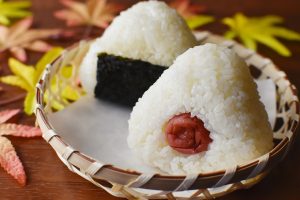
1. Diet: What we eat, and how we cook and digest it
Words of Master Sasaki
“This is why the kitchen has long been called ‘the pharmacy of life.’
The one who presides over the kitchen is the mother.
For generations, the health of the family has been protected by mothers.
It is deeply regrettable that the virtues of traditional Japanese cuisine have no longer been passed down due to the rise of nuclear families.
As a result, the health of the Japanese people is now at risk.”
(My commentary)
→ I became interested in Sanmeigaku after realizing the profound importance of food.
The human body is often described as a miniature universe, a unified whole in which all elements of Yin–Yang and the Five Elements are integrated. Therefore, instead of treating only the part of the body where an abnormality appears—as is often the case in Western medicine through surgery or medication—we should nourish the organ that lies at the root of the problem.
This means avoiding foods that burden that organ and instead consuming foods that support and nourish it. I practiced this form of yojo (nourishing life) for one full year during the COVID period, through all four seasons. As a result, I lost five kilograms, and most of my physical discomfort disappeared.
Since then, whenever I feel something is off in my body, I return to this Five Elements way of thinking. I identify the underlying organ, adjust my diet and daily habits, and the physical imbalance gradually resolves itself.
Through these experiences—using my own body, in what could be called a form of human experimentation—I came to realize the deep connection between the body and the universe, and that the root cause of illness ultimately lies in what we eat.
By reexamining and returning to foods suited to the Japanese body, I experienced firsthand that it is possible to maintain both physical and mental health.
2. Sleep: Allowing both body and mind to become tired in a well-balanced way
Words of Master Sasaki
“According to my mother’s teachings, the state of one’s mind at the moment of falling asleep shapes one’s character. For this reason, she taught me to place something beautiful—such as a pearl—by my pillow and to fall asleep while gazing upon it. Even in the busy life of adults living in modern society, the fact remains that one third of each day is spent sleeping. From this perspective, to sleep is closely connected to refine oneself, and sleep should be regarded as a serious form of spiritual training.
Therefore, one should fall asleep while looking at something beautiful.
One must never watch dark or disturbing television programs, nor listen to radio broadcasts that distress the heart before going to bed.”
(My commentary)
→ Kazo Inamori, the Honorary Chairman of Kyocera, also said that no matter how busy he was, he always read a few pages of philosophical books before going to sleep each night. He also kept a notebook by his pillow so that he could immediately write down any inspiration that might come to him.
I, too, wish to fall asleep after filling my mind with beautiful words and images.

3. Material desire: Adopting the mindset that all possessions are merely “borrowed”
Words of Master Sasaki
“Material desire has also been a blessing, as it has driven the progress of civilization.
Through material civilization, we have achieved lives that are both affluent and convenient.
However, when we become attached to possessions, this same desire becomes a source of unhappiness.
There is a traditional children’s song in Japan that goes, ‘Tie, and untie…’
It teaches that in this world there is no true ownership—only the right of use.
We tie our hands to an object and work with it. Then we release it and tie our hands to another object.
Human beings are helpers of the divine.
Even if we try to hold things with both hands, there is very little we can actually carry.
Cupboards and desks can hold far more than we ever can.
Humans have only the right to use things, never true ownership.
‘There is no possession, only use.’
‘Emptiness is the greatest abundance.’
‘When you let go of everything, you gain everything.’
It is the liberation of the mind that ultimately shapes both the core of one’s being and the body itself.”
(My commentary)
Mr.Inamori often said that one must never privatize one’s abilities.
Through studying Yin–Yang and the Five Elements in Sanmeigaku, I came to understand that everything in this world exists in cycles.
Each of us is given a role by something greater—be it the divine or the universe—and we exist to fulfill a part within this great circulation.
I understand my own existence as being grounded in serving one segment of this ongoing cycle. With the time given to me, and by using this body and mind entrusted to me, I wish to help set larger cycles in motion.
To summarize, no matter how strong our aspirations may be, the human body is our fundamental capital.
To keep both body and mind in a healthy state, it is essential to take care with what we eat, how we sleep, and how we relate to material desire.
These are the points I wish to remain constantly mindful of in my daily life.
*Master Masando Sasaki
Born in 1929 in Nagai City, Yamagata Prefecture.
After overcoming many hardships in his youth, he graduated from the Faculty of Economics and the Advanced Course of the Faculty of Law at Chuo University.
After resigning from his post at the Defense Agency, he encountered Morihei Ueshiba, the founder of Aikido, and devoted himself to martial arts and the cultivation of the human spirit, eventually becoming an Aikido instructor.
While seeking the true path of life, he practiced waterfall austerities, zazen, and trained in groups such as “Ichiku-kai” and “Itsui-kai.”
He later met his life mentor, Nakamura Tempu, and studied under him.
Through a fortunate connection, he became associated with Yamakage Motoo and was ordained as a priest of the Yamakage Shinto tradition, serving as the chief priest of Kamifukuoka Nishimiya Shrine.
In 1977, he was invited by the French Ministry of Culture to Paris as a Shinto instructor at the “Dojo for the Restoration of Human Nature,” and he visited France again in 1985.
Alongside teaching Aikido, he traveled throughout Japan delivering “Sasaki Dharma Talks,” expounding on the traditional Japanese cultural arts—such as martial arts, tea ceremony, and flower arrangement—and on the true path of being human.
Further queries or doubts, please email to ytomizuka@abrilsjp.com
News Letter subscription is here